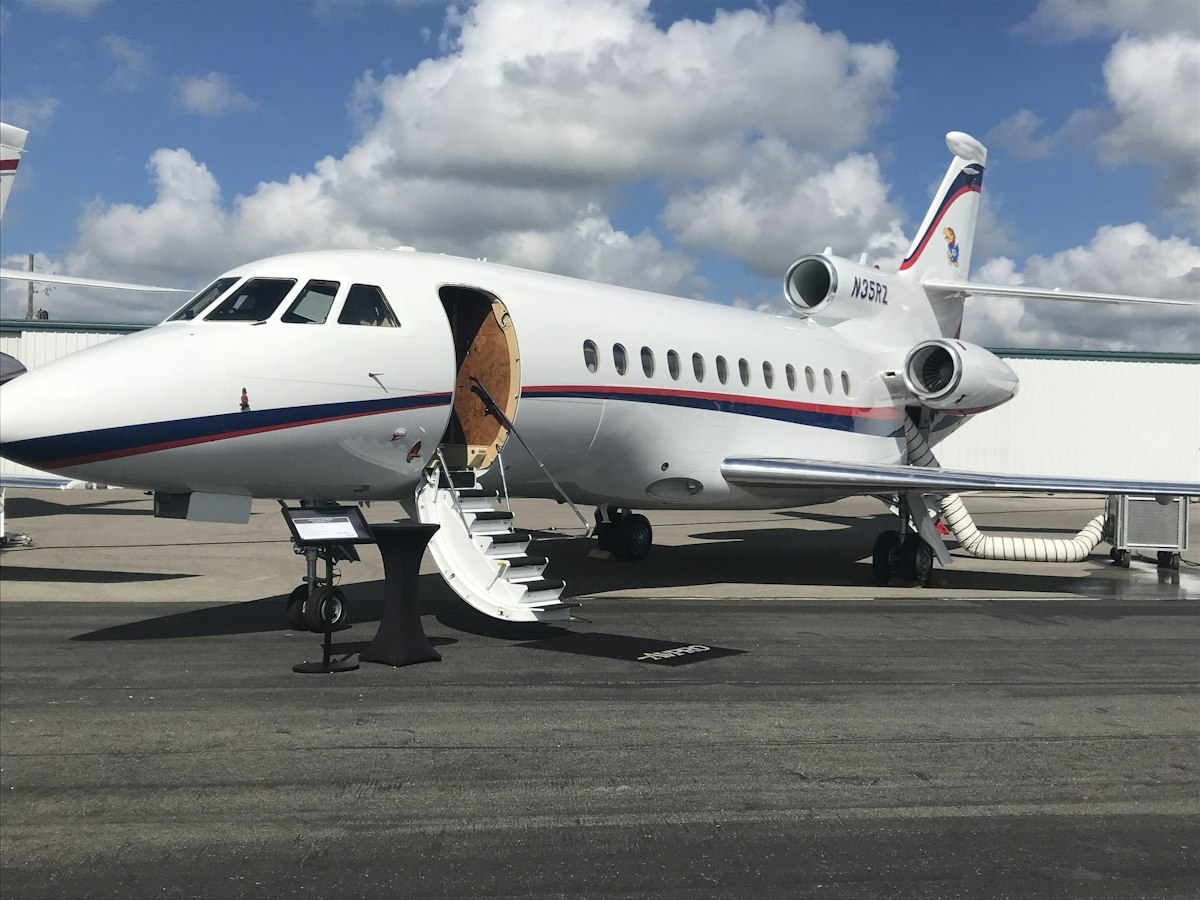
The Evolution of the Business Jet: From Status Symbol to Strategic Asset
In the mid-20th century, the image of a private aircraft was inextricably linked to the 'jet set'—a rarefied cadre of luminaries, industrialists, and aristocrats who navigated the globe with a sense of enviable, leisurely detachment. To step aboard a private jet in 1965 was a statement of arrival. Today, however, the industry has undergone a fundamental metamorphosis. While the inherent comfort of private aviation remains, the primary impetus for its usage has shifted from the pursuit of luxury to the ruthless pursuit of time.
### The Turning Point: Precision and Utility
The modern era of business aviation effectively began in the mid-1960s. Before this, corporate travel often involved modified piston-engine aircraft that were slow, loud, and geographically limited. The introduction of purpose-built business jets changed the calculus entirely. Suddenly, a CEO could depart from Teterboro (TEB) in New Jersey and arrive at a regional airport in the Midwest or a major hub like London Luton (LTN) with a level of speed and autonomy previously reserved for heads of state.
These early jets were not merely flying limousines; they were productivity platforms. Executives began to realize that the ability to conduct meetings at 40,000 feet, to depart on their own schedules, and to bypass the labyrinthine processes of commercial terminals was not just a luxury—it was a competitive advantage.
### Dismantling the Friction of Commercial Travel
The transition of private aviation into a standard business necessity is best understood through the lens of 'friction reduction.' Commercial travel, while efficient for the masses, is inherently rigid. It dictates the schedule, the routing, and the environment. For a global executive managing complex operations across multiple time zones, the unpredictability of commercial scheduling—cancellations, lengthy security queues, and the inability to reach secondary markets—represents a significant 'tax' on human capital.
Private aviation eliminates these variables. With access to over 5,000 public-use airports across the United States alone—the vast majority of which remain untouched by commercial carriers—a business leader can land within minutes of a manufacturing facility or an off-site headquarters. This capability turns a grueling three-day commercial slog into a seamless single-day round trip. In this light, the aircraft is no longer a discretionary expense; it is a vital tool for organizational agility.
### The Pandemic Acceleration
If the evolution was steady for decades, the events of recent years acted as an accelerant. As global transit systems faced unprecedented uncertainty, the value proposition of private aviation was stripped to its essentials: health, reliability, and control.
This period solidified the transition from a 'luxury item' to a 'risk management asset.' Businesses that had previously relied on premium commercial cabins began to integrate private charter and fractional programs into their core logistics. They found that when time is the most expensive commodity, the cost-per-seat of a mid-size or super-midsize jet is easily justified by the sheer gain in productivity and the protection of the executive's bandwidth.
### The Future: Maturity and Integration
Today, the fleet of over 23,500 active business jets represents a global nervous system for corporate operations. We are seeing a more sophisticated, data-driven approach to utilization. Decisions are now made by CFOs and operations directors, not just executive assistants, with a focus on route optimization, cabin connectivity, and long-term asset management.
As we look toward the next decade, with thousands of new deliveries projected, the industry will continue to move away from the optics of excess toward a paradigm of pure utility. The aircraft of tomorrow will be judged by their ability to provide seamless, consistent connectivity to the most remote corners of the business world.
Private aviation has outgrown the 'glamour' label that defined its infancy. It has matured into a cornerstone of the global economy, serving as the silent engine that allows business leaders to be everywhere they need to be, precisely when they need to be there. In the high-stakes theater of modern commerce, the business jet is not an indulgence—it is the ultimate instrument of efficiency.