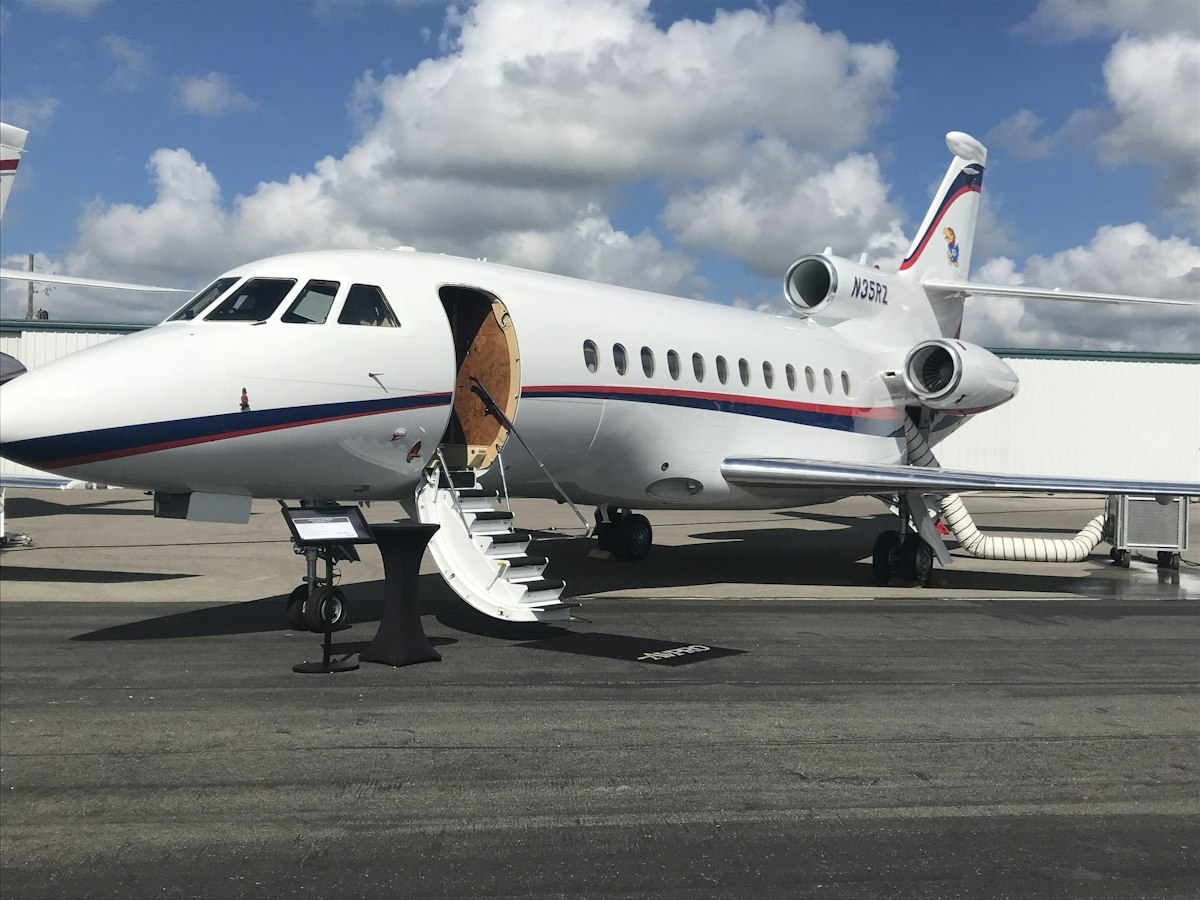
The Birth of Business Aviation: The 1960s Learjet Era
In the early 1960s, a significant turning point in air travel began to unfold, marking the dawning of business aviation as we know it today. The Learjet 23, introduced in 1964, was the catalyst for this transformation. With its elegant design and impressive flight capabilities, it became synonymous with the essence of luxury travel. The combination of speed—cruising comfortably at 400 knots—and a contemporary cabin layout meant that business executives could spend less time in transit and more time engaging with clients.
Airports like Teterboro (TEB) and Van Nuys (VNY) became bustling hubs for the burgeoning industry, catering to the sharp demand for private jets. Executives who never before considered chartering or owning a jet now sought the comfort, time savings, and prestige that came with pilot-operated resilience.
The Widebody Era: Expanding Horizons
As the 1970s rolled into the 1980s, the business aviation landscape broadened significantly. The introduction of widebody jets such as the Boeing 757 and 767 opened up new realms of possibility. These aircraft allowed for longer flights with increased passenger capacities, catering not just to business moguls but also to the evolving needs of multinational corporations.
During this era, the industry witnessed the rise of modified commercial jets tailored for executive travel, which delivered high levels of comfort without the extended lead times often required for custom builds. The cabins of these aircraft began to exhibit lavish amenities—not the least of which were spacious lounges and fully-equipped offices in the sky. Airports not typically associated with private aviation, like O'Hare (ORD) and JFK, became strategic locations for these operators, offering seamless connectivity for global business leaders.
Fractional Ownership: A New Paradigm
The 1990s brought about an innovative business model that would forever change the way people accessed private aviation—fractional ownership. This concept, pioneered by companies like fractional ownership pioneers, allowed individuals and businesses to share ownership of aircraft, turning private flights from exclusive luxuries into attainable experiences for a broader audience.
With the fractional model, a client might own as little as one-sixteenth of a jet, still affording them access to an array of aircraft. This flexibility appealed to many, leading to a surge in industry growth. Airports across the nation, including smaller regional airports such as Palm Beach International (PBI) and Aspen/Pitkin County (ASP), became frequented service points where passengers could access their aircraft without the overhead and commitment of sole ownership.
The Modern Era: Ultra-Long-Range Jets
Today, we are witnessing the latest paradigm shift in business aviation: the emergence of ultra-long-range jets. Aircraft such as the Bombardier Global 7500 epitomize this evolution. Launched in 2018, the Global 7500 redefined luxury air travel with its impressive range of 7,700 nautical miles, allowing travelers to fly non-stop from New York to Sydney or Los Angeles to Dubai.
Contemporary jets are equipped with cutting-edge technology, like advanced fly-by-wire systems, and offer cabin layouts that mirror high-end residences. The Global 7500's cabin boasts four distinct living spaces, an established galley, and sleeping compartments, showcasing what modern aviation can deliver—transforming even the most remote destinations into accessible locales.
Airports like Hong Kong International (HKG) and London Heathrow (LHR) have adapted their infrastructures to accommodate this growing class of long-range aircraft, enhancing their offerings to increasingly discerning clientele who demand both luxury and efficiency.
Conclusion: A Soaring Future
From the sleek contours of the Learjet to the expansive luxury of the Global 7500, the history of private aviation is rich with stories of innovation, luxury, and transformation. This journey reflects not just technological advancement, but a deep understanding of user needs—how they travel, where they go, and, most importantly, how they prefer to arrive. As we look to the future, the continuous evolution of aircraft technology promises to enhance the business aviation experience even further, making what once felt like an exclusive realm increasingly accessible and tailored to the needs of modern travelers. The sky truly is the limit for private aviation, and as new jet models are developed, the horizon expands with each innovation, ensuring that the luxurious journey continues.